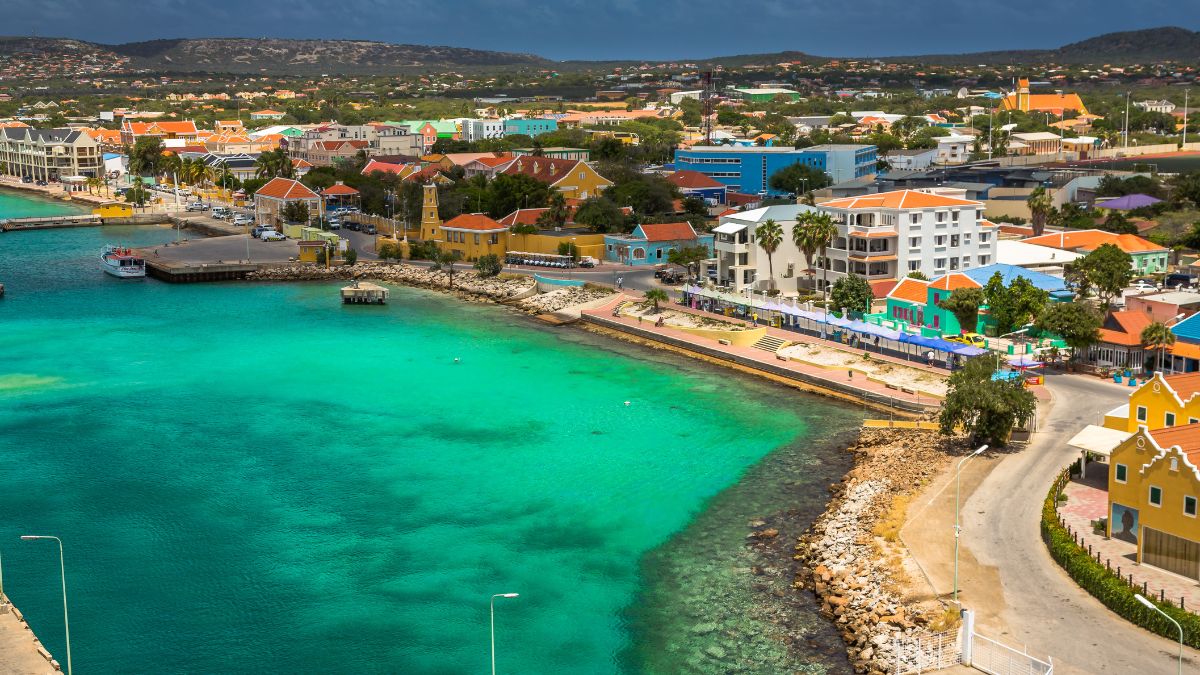
What is the best time to visit Bonaire?
For most travelers, roughly February through May is an excellent window to visit Bonaire.
This period generally combines warm temperatures with the drier part of Bonaire's climate.
But that doesn't mean you should avoid the rest of the year.
Bonaire's relatively dry climate and location in the southern Caribbean make it much more of a year-round destination than islands with dramatic wet and dry seasons.
Your ideal month depends on your priorities.
Best for generally drier weather
February through May
Best for diving
Year-round
Bonaire's diving isn't limited to one short season.
Best for avoiding the busiest winter travel period
Look outside the major winter and holiday travel periods and compare accommodation prices for your dates.
Best for warm water
Later summer and early autumn generally bring some of the warmest sea conditions.
Best if hurricane risk worries you
Bonaire has a lower hurricane exposure than many Caribbean destinations, but tropical systems are still possible during the Atlantic hurricane season.
What is Bonaire's climate like?
Bonaire has a warm, relatively dry tropical climate.
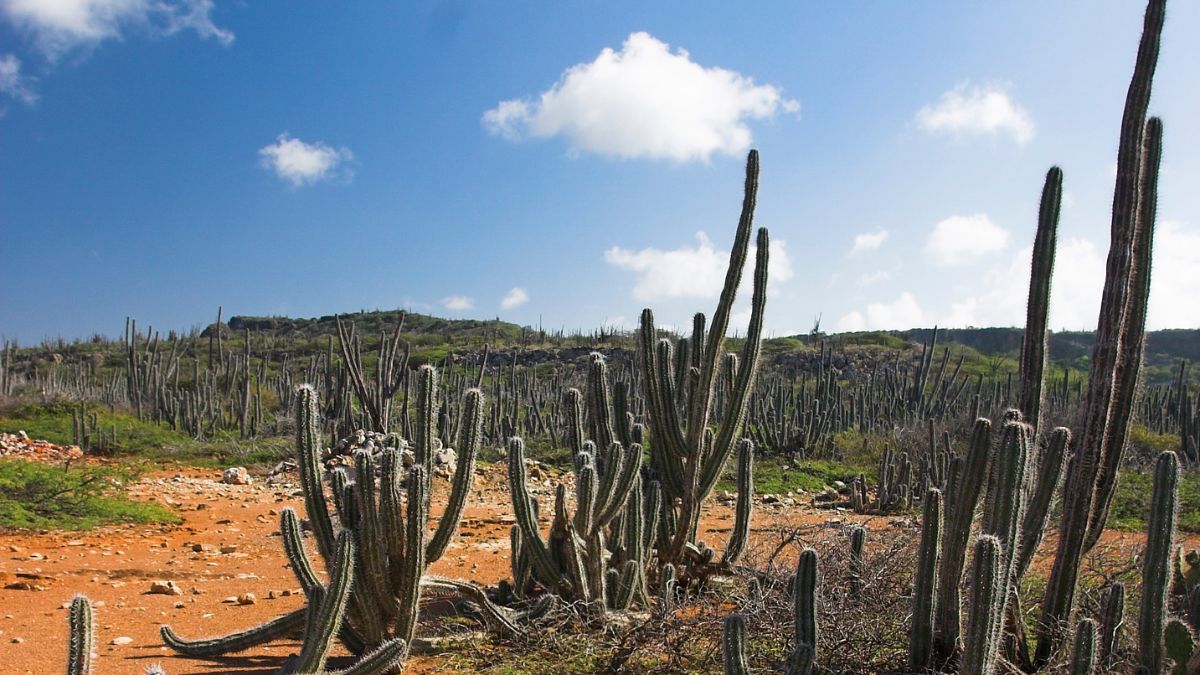
Unlike lush Caribbean islands with heavy rainfall and dense tropical vegetation, Bonaire's landscape is dominated by cactus, scrub and dry terrain.
Average temperatures remain warm throughout the year.
Trade winds are another defining part of Bonaire's climate.
They're one reason windsurfing and other wind sports are so closely associated with the island, particularly around Lac Bay.
The wind can also make hot sunny days feel more comfortable than the temperature suggests.
Don't let that fool you into underestimating the sun.
Bonaire temperature by month
Temperatures vary less than many travelers expect.
You aren't choosing between a cold season and hot season.
You're choosing between warm and slightly hotter.
| Month | General conditions |
|---|---|
| January | Warm, breezy, occasional showers |
| February | Warm and increasingly dry |
| March | Dry, sunny and breezy |
| April | Warm and generally dry |
| May | Hot, generally dry |
| June | Hot and windy |
| July | Hot and windy |
| August | Hot, warm sea |
| September | Among the hotter periods |
| October | Hot with increasing chance of rain |
| November | Wetter period |
| December | Warm with a greater chance of showers |
Daytime temperatures around Bonaire commonly remain around the high 20s to low 30s Celsius.
That consistency is one of the main reasons Bonaire works as a year-round Caribbean destination.
Bonaire weather in January
January is warm and breezy.
The wetter part of the year can extend into January, so brief showers are possible, but you're still traveling to a warm Caribbean island rather than entering a traditional winter season.
January is attractive if you're escaping colder weather in Europe or North America.
It's also part of the popular winter Caribbean travel period, so accommodation availability may matter more than weather.
Good for: winter sun, diving, snorkeling.
Bonaire weather in February
February begins moving toward the drier part of the year.
Expect warm temperatures, trade winds and plenty of opportunity for outdoor activities.
This is one of the easier months to recommend for first-time visitors because you get favorable seasonal conditions without needing to plan your trip around one specific activity.
Good for: first-time visitors, diving, snorkeling, outdoor activities.
Bonaire weather in March
March falls within Bonaire's generally drier period.
Warm temperatures and relatively limited rainfall make it a strong month for exploring both land and water.
It's particularly useful if your itinerary combines snorkeling with places such as Washington Slagbaai, the salt flats and Lac Bay.
Good for: mixed itineraries, snorkeling, diving, sightseeing.
Bonaire weather in April
April continues the generally dry pattern.
Expect hot, sunny conditions and regular trade winds.
Because Bonaire doesn't experience huge seasonal temperature swings, the attraction of April is less about temperature and more about the combination of sunshine and relatively dry conditions.
Good for: almost every type of Bonaire trip.
Bonaire weather in May
Weather remains warm and May sits around the transition from the drier part of the year toward summer.
It's a good month to consider if you aren't tied to winter or school-holiday travel dates.
Good for: diving, snorkeling, active vacations.
Bonaire weather in June
June is hot and typically windy.
The Atlantic hurricane season officially begins on June 1, but that doesn't suddenly turn Bonaire into a high-risk hurricane destination.
Bonaire lies much farther south than many of the Caribbean islands most frequently affected by hurricanes.
Still, tropical weather should never be treated as impossible.
Good for: diving, wind sports, summer travel.
Bonaire weather in July
July remains hot with established trade winds.
The wind is particularly relevant if you're interested in Bonaire's wind sports.
For snorkeling and shore diving, conditions can vary from site to site, so it's more useful to check the day's local conditions than to assume an entire month will behave the same way.
Good for: diving, windsurfing, summer vacations.
Bonaire weather in August
August is hot and falls within Atlantic hurricane season.
However, Bonaire's southern location means its hurricane exposure is lower than many northern and eastern Caribbean destinations.
Don't interpret "lower risk" as "zero risk."
Good for: warm-water activities, diving, summer trips.
Bonaire weather in September
September is among the hotter periods of the year.
It's also within the Atlantic hurricane season.
Trade winds can become less consistent than during windier parts of the year, which can make the heat feel more noticeable.
For divers and snorkelers, however, the warm water can be attractive.
Good for: diving, snorkeling, travelers comfortable with hotter conditions.
Bonaire weather in October
October remains hot and sits closer to the wetter part of Bonaire's annual cycle.
Rainfall doesn't necessarily mean entire vacation days disappear.
Tropical showers can be localized and relatively short.
Still, if minimizing rain is your overriding priority, the drier months earlier in the year make more sense.
Good for: diving, warmer water, flexible travelers.
Bonaire weather in November
November is part of Bonaire's wetter season.
That sounds more dramatic than it usually is.
Bonaire remains relatively dry by Caribbean standards, but your chance of encountering showers is greater than during the drier months.
If you're considering November, don't look only at a weather-app icon showing rain.
A forecast containing showers doesn't necessarily mean continuous rain.
Good for: travelers who don't mind occasional showers.
Bonaire weather in December
December is warm but falls within the wetter part of Bonaire's climate.
It's also important to separate weather from travel demand.
The holiday period can affect accommodation availability and pricing regardless of whether December is the statistically ideal weather month.
If you're planning Christmas or New Year in Bonaire, I'd book based on availability rather than waiting for a perfect forecast.
Good for: holiday travel, diving, escaping winter.
Does Bonaire have a rainy season?
Yes, but Bonaire's rainy season isn't comparable with the wet seasons of much rainier tropical destinations.
The wetter part of the year is generally concentrated toward the later months of the year and into winter.
Even then, Bonaire's overall climate remains relatively dry.
A rainy day in a forecast also doesn't necessarily mean eight hours of continuous rain.
Showers can arrive and disappear while much of the day remains usable.
That's why I'd avoid choosing your Bonaire dates solely based on the words "rainy season."
Is Bonaire in the hurricane belt?
This needs a more nuanced answer than simply yes or no.
Bonaire lies in the southern Caribbean and has historically had lower hurricane exposure than many islands farther north and east.
That's why you'll frequently see Bonaire described as being outside the main hurricane belt.
But that does not mean hurricanes or tropical systems are impossible.
The official Atlantic hurricane season runs from June 1 through November 30.
If you're traveling during that period, normal hurricane-season precautions still make sense:
- monitor forecasts
- consider flexible bookings
- understand your travel insurance
- follow official local weather information if a system develops
The important distinction is:
Lower hurricane risk does not mean zero hurricane risk.
Does Bonaire get hurricanes?
Direct hurricane impacts are uncommon compared with many Caribbean islands.
However, tropical systems can still affect Bonaire or the surrounding region.
Even a storm that doesn't directly cross the island can potentially influence:
- waves
- wind
- rain
- flights
- diving conditions
So I wouldn't choose Bonaire because someone promised that hurricanes "can't happen."
Choose it because its historical hurricane exposure is relatively low.
When is hurricane season in Bonaire?
The Atlantic hurricane season runs from:
June 1 to November 30.
That applies to the wider Atlantic basin.
It doesn't mean Bonaire experiences hurricanes every year — far from it.
It simply means this is the period when travelers should pay greater attention to tropical-weather forecasts.
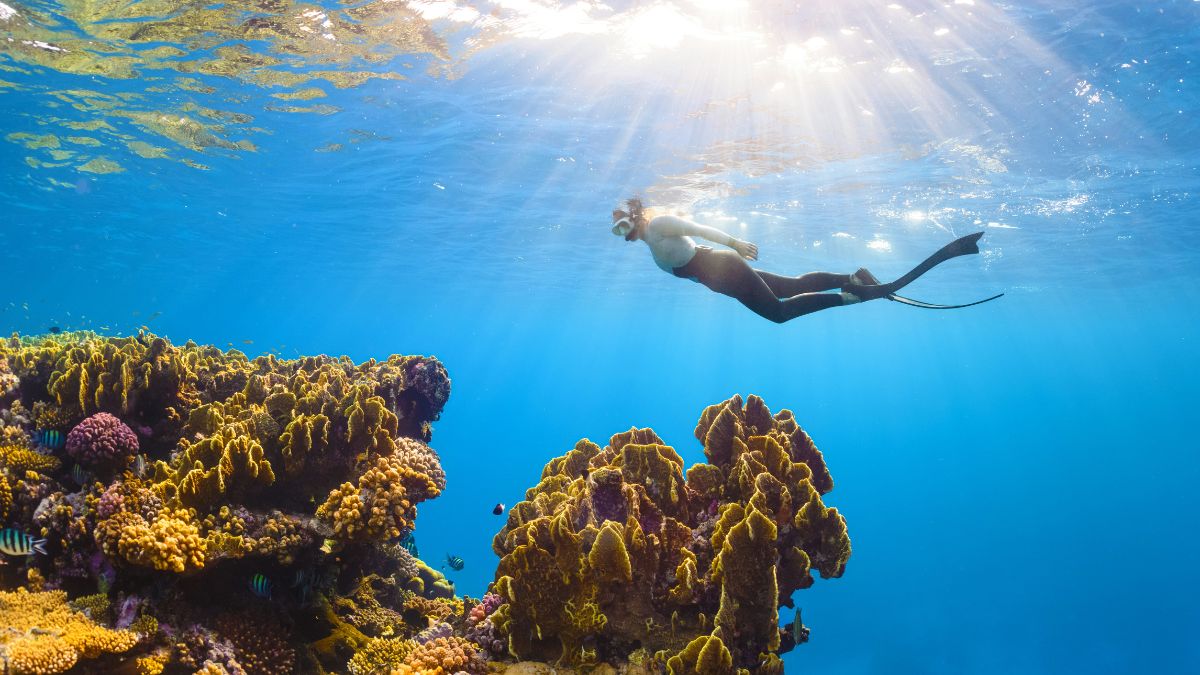
Best time to dive in Bonaire
There isn't one short Bonaire diving season.
Bonaire is a year-round diving destination.
That's one of its major advantages.
Rather than choosing your trip solely based on the month, consider:
- wind
- local sea conditions
- visibility at the individual site
- water temperature
- your experience level
- which part of the island you're diving
Conditions can change locally even when the overall island weather looks excellent.
For most recreational divers, I wouldn't postpone an otherwise convenient Bonaire trip simply because it isn't supposedly the "best diving month."
Best time to snorkel in Bonaire
Snorkeling is also possible throughout the year.
Morning conditions can sometimes be attractive because winds and sea conditions may differ as the day develops, but this isn't a universal rule for every site and every day.
Bonaire's west coast gives you numerous options.
If one site doesn't look inviting, having a rental car allows you to try somewhere else.
Best time to visit Bonaire for windsurfing
Wind is an important part of Bonaire's climate and one reason Lac Bay has become so closely associated with windsurfing.
If wind sports are the primary reason for your trip, seasonal wind patterns matter more than they do for a conventional beach vacation.
Check current conditions and specialist wind-sport guidance when choosing exact dates.
Best time to visit Bonaire for lower prices
Don't assume one month is automatically cheapest every year.
Hotel and airfare prices depend on:
- holidays
- flight schedules
- demand
- accommodation availability
- events
- how early you book
Generally, traveling outside the busiest winter and holiday periods can give you more opportunities to find lower rates.
Compare several date ranges rather than planning around a supposed fixed "40% cheaper" season.
Bonaire weather vs Aruba
Bonaire and Aruba share several climate characteristics.
Both are warm, relatively dry southern Caribbean islands influenced by trade winds.
Neither has the dramatic seasonal temperature changes found in temperate destinations.
For most travelers, I wouldn't choose between Aruba and Bonaire based purely on weather.
The much bigger differences are:
- beaches
- diving
- resorts
- nightlife
- restaurants
- island atmosphere
- how you get around
What to pack for Bonaire's weather
Bonaire is warm throughout the year, so pack for sun, heat and outdoor activities.
Useful items include:
- lightweight clothing
- swimwear
- sun protection
- hat
- sunglasses
- reusable water bottle
- water shoes for rocky entries
- light layer for strongly air-conditioned spaces
- rain protection if you prefer having it during wetter months
The wind can make the sun feel less intense than it really is, so don't use comfort as a measure of UV exposure.