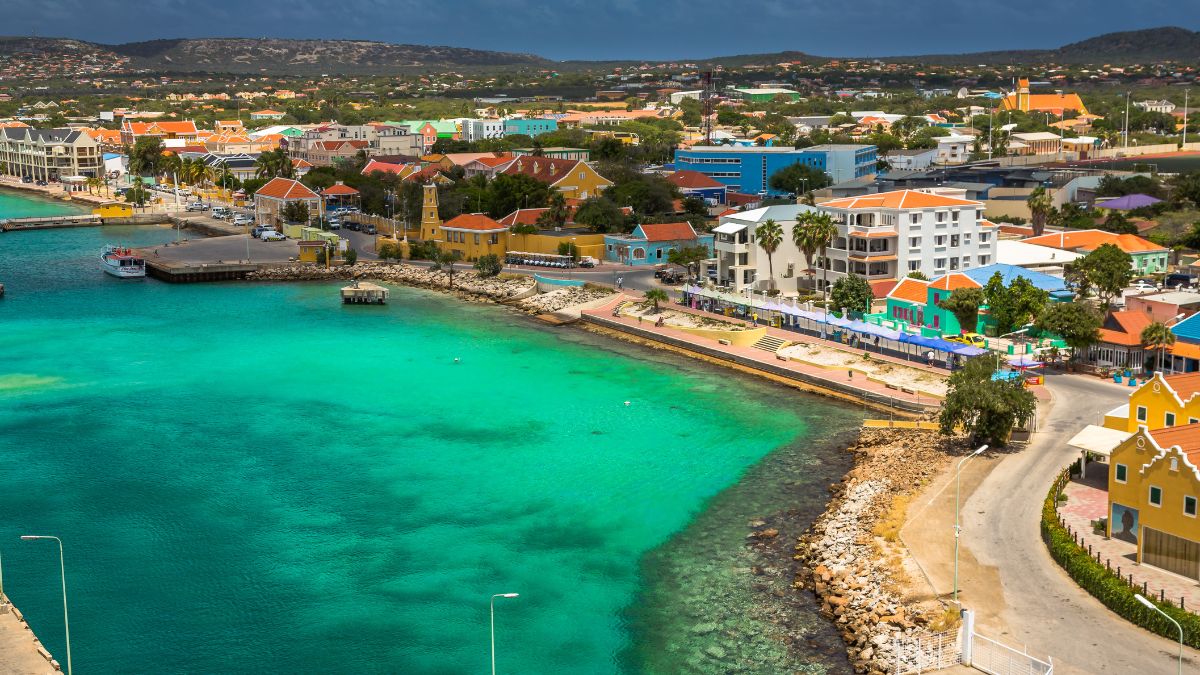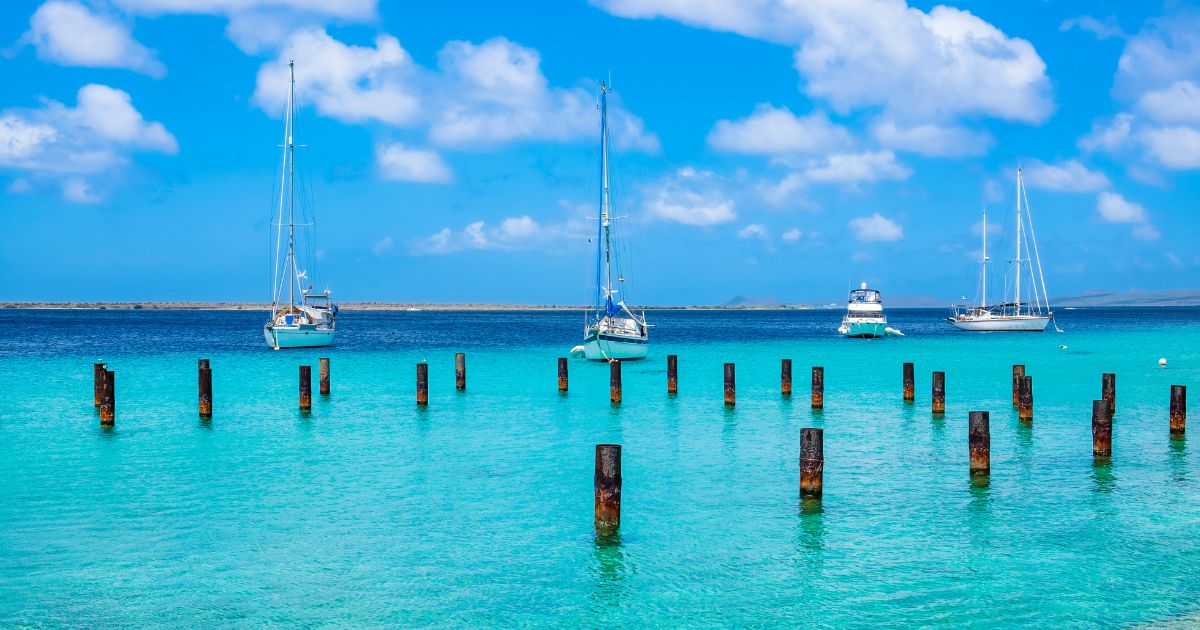
Where are the Bonaire salt flats?
The salt flats are on southern Bonaire, south of Kralendijk.
You don't need to hike into the interior to find them.
Drive south from Kralendijk along the coastal road and the landscape gradually opens into large evaporation ponds and salt-production areas.
The salt works dominate much of southern Bonaire, making them difficult to miss.
Many of the main sights can be viewed from roadside stops along the route.
Can you visit the Bonaire salt flats?
Yes — but there's an important distinction.
You can visit the salt-flats area and view the landscape from public roads and appropriate stopping areas.
You cannot simply walk into the active salt works.
Some areas are industrial property and access is restricted.
Stay behind barriers and respect signs rather than entering the salt ponds or approaching the salt piles.
The experience is therefore more like a scenic road trip with multiple stops than walking freely across an empty salt flat.
Why are the Bonaire salt flats pink?
The pink color comes from the conditions inside the highly saline evaporation ponds.
Seawater moves through shallow ponds and gradually evaporates under Bonaire's sun and wind.
As salinity increases, microorganisms adapted to extremely salty conditions can give the water shades ranging from pale pink to deeper reddish or orange tones.
The exact appearance isn't constant.
Sunlight, viewing angle, weather, water conditions and the stage of the evaporation process can all affect how pink a pond appears.
So don't expect every salt pond to look like a heavily edited Instagram photograph.
Some will appear much more intensely colored than others.
What are the white mountains in Bonaire?
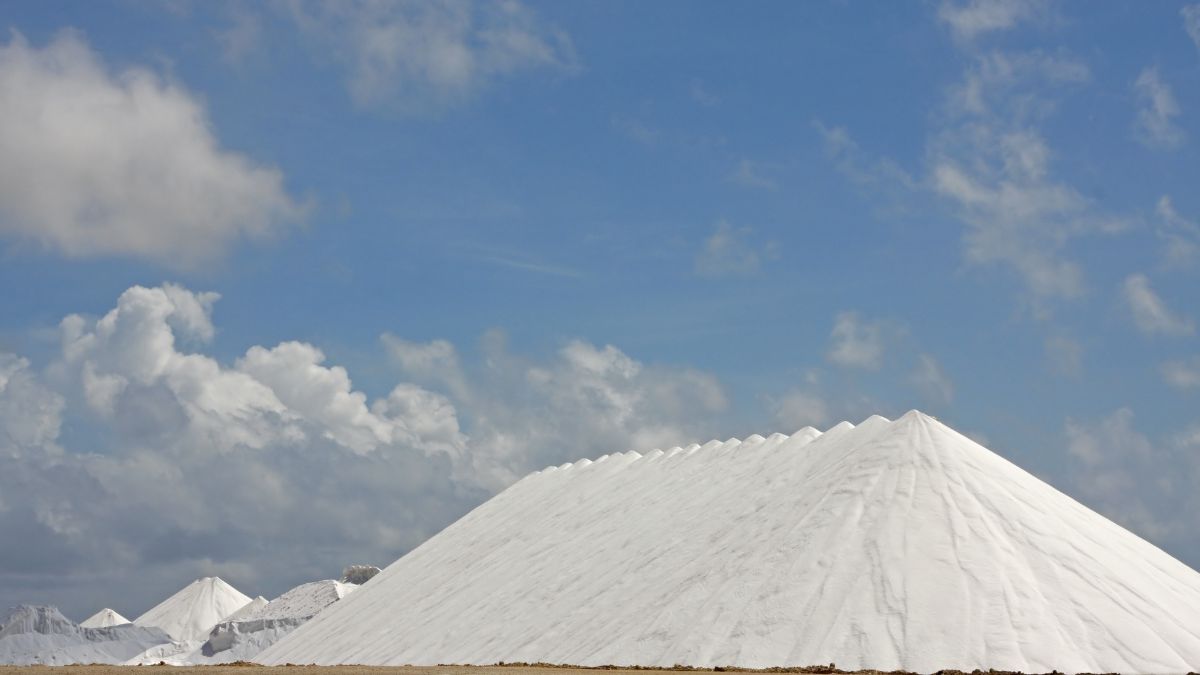
Those huge white piles aren't natural mountains.
They're harvested sea salt.
Once the evaporation process has concentrated the seawater sufficiently, the salt can be harvested and stored in large piles before export.
Against Bonaire's flat southern landscape, the piles can look enormous.
They're commonly described as:
- salt pyramids
- salt mountains
- salt piles
If you've searched for Bonaire salt pyramids, this is what you're looking for.
How is salt made in Bonaire?
Bonaire has a long history of salt production.
The basic principle is surprisingly simple:
seawater + shallow ponds + sun + wind = increasing salt concentration
Seawater enters a system of evaporation ponds.
As water evaporates, the remaining water becomes increasingly saline.
It eventually reaches the point where salt can crystallize and be harvested.
The modern operation is industrial, but the environmental conditions that make the process possible are the same fundamental reason salt has been produced in Bonaire for centuries.
Bonaire salt pans, salt flats or salt mines?
You'll see several different terms online.
They're often referring to the same general southern salt-production landscape, but they don't mean exactly the same thing.
Salt pans
The shallow evaporation ponds used during salt production.
Salt flats
The broader term travelers commonly use for the flat salt-producing landscape of southern Bonaire.
Salt pyramids
The large piles of harvested salt.
Salt mines
You'll sometimes see people search for the Bonaire salt mines, but the visible operation isn't a conventional underground mine. Salt is produced through the evaporation of seawater.
So if you're looking for the “salt mines of Bonaire,” the southern salt works and evaporation ponds are probably what you mean.
Best stops at the Bonaire salt flats
Don't treat the salt flats as one attraction with an entrance and parking lot.
The better way to experience them is as a series of stops along southern Bonaire.
1. Salt Pier
Salt Pier is one of the most recognizable industrial structures along the coast.
It's used as part of the salt-export operation, with the white salt piles and evaporation ponds visible nearby.
The industrial area itself isn't a tourist attraction you can freely enter.
View it from appropriate public areas and obey any restrictions.
Salt Pier is also known within Bonaire's diving community, but access and conditions should always be checked locally before planning a dive or snorkel.
2. Pink salt pans
Continue through southern Bonaire and you'll see large evaporation ponds.
These are the landscapes responsible for the famous Bonaire pink salt flats photographs.
Color varies considerably.
If photography is important to you, don't assume the first pond you see will necessarily have the strongest color.
Take your time along the route and use safe stopping locations.
3. Salt pyramids
The giant white piles are impossible to confuse with anything else.
They're particularly striking because southern Bonaire is so flat.
Don't climb them or cross into restricted industrial areas to get closer.
You can see and photograph the salt piles without entering the operation.
4. Colored obelisks
The colorful obelisks along Bonaire's southern coast are connected to the island's historic salt trade.
They served as markers associated with the locations where salt was loaded for shipment.
They're easy to include during the same drive and add useful historical context to what would otherwise look like a purely modern industrial landscape.
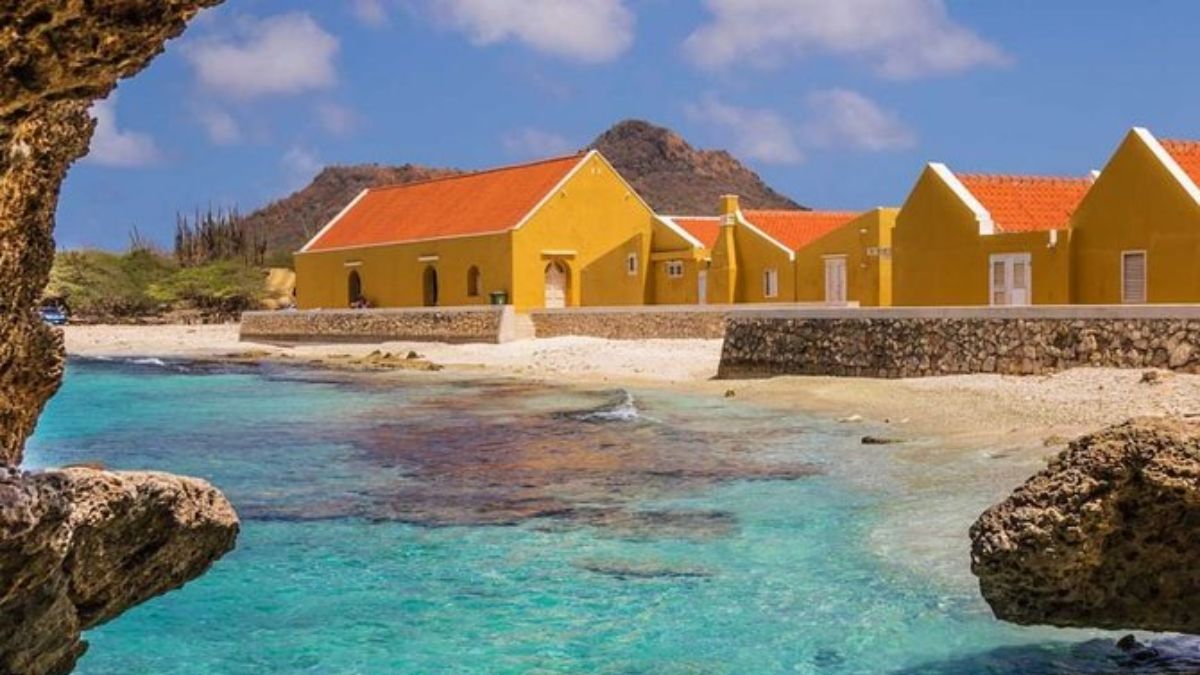
5. White Slave Huts
The small white huts near the salt works are among the most important historical stops in southern Bonaire.
They are reminders that Bonaire's salt industry was historically built using enslaved labor.
Enslaved workers were housed near the salt pans during the working week because of the distance involved in traveling back to their communities.
The huts are extremely small.
Seeing them in person puts the scale and conditions of that history into a context that photographs don't fully convey.
Treat this as a historical site, not simply another colorful photo stop.
6. Willemstoren Lighthouse
Continue toward Bonaire's southern tip and you'll reach the Willemstoren Lighthouse area.
It makes a natural additional stop if you're already driving the complete southern loop.
7. Continue toward Lac Bay and Sorobon
Rather than turning around immediately after the salt flats, you can continue around southern Bonaire toward the eastern side of the island.
That turns the salt flats into part of a much better half-day road trip.
Bonaire salt flats driving route
For most independent visitors, I'd structure the drive roughly like this:
Kralendijk → Salt Pier → pink salt pans → salt pyramids → colored obelisks → White Slave Huts → Willemstoren → east/southeast coast → Lac Bay/Sorobon → Kralendijk
Don't worry about rushing between stops.
Part of the appeal is watching the landscape change as you move farther south.
How long does the Bonaire salt flats route take?
If you only want to see the salt ponds and salt pyramids, allow roughly 1–2 hours depending on how often you stop.
For a broader southern Bonaire loop with historical stops, the lighthouse and time around Lac Bay, allow approximately 3–4 hours.
Add more time if you're combining the route with swimming, snorkeling or lunch.
Do you need a tour of the Bonaire salt flats?
No.
If you have a rental vehicle and are comfortable exploring independently, the salt flats are one of the easier Bonaire sights to incorporate into your own road trip.
But a tour has one major advantage:
context.
Without a guide, you'll see enormous white salt piles, pink ponds, small huts and strange colored obelisks.
A knowledgeable guide can explain how those pieces connect to Bonaire's salt industry and colonial history.
Self-drive is better if:
- you already have a rental car
- photography is important
- you want to stop whenever you like
- you're combining the salt flats with other southern locations
- you prefer exploring independently
A guided tour is better if:
- you don't have a rental vehicle
- you're visiting from a cruise ship
- you want historical explanation
- you want an island overview
- you don't want to navigate the route yourself
Bonaire salt flats tours
Several Bonaire sightseeing tours include the southern salt works.
Rather than choosing solely by price, look at how much of the tour is actually dedicated to southern Bonaire.
Some full-island tours stop briefly at Salt Pier before continuing north.
Others spend more time around the salt pans, slave huts and historical sites.
If the salt flats are your main interest, choose a south-focused or salt-history tour.
If this is your first day in Bonaire and you want to understand the whole island, a north-and-south tour can make more sense.
Bonaire salt flats from a cruise ship
The salt flats are a practical excursion for cruise visitors because they're south of Kralendijk and can be incorporated into a half-day sightseeing route.
Your main options are:
Guided excursion
Simplest if you want transportation and guaranteed structure around your port day.
Taxi/private driver
Useful if you want more flexibility without renting a vehicle.
Rental car
Offers the most independence, but make sure you leave plenty of time to return the vehicle and get back to your ship.
Cruise visitors should be more conservative with timing than travelers staying overnight on Bonaire.
Can you see flamingos at the Bonaire salt flats?
Flamingos can be seen around southern Bonaire and its saline environments.
But they're wild animals.
Don't plan your entire salt-flats trip around seeing them at one exact roadside location.
Where they congregate and how close they are can vary.
Use designated viewpoints, keep your distance and respect restricted areas.
A telephoto lens is much more useful than trying to physically get closer.
Best time to visit the Bonaire salt flats
There's no single hour when everyone should visit.
It depends on what you're trying to see.
For photography
Early morning and later afternoon generally provide softer light and more texture across the landscape.
For seeing pink water
Brighter light can make color easier to see, although glare can also become stronger.
For a south-coast road trip
Choose whatever time fits naturally into your itinerary and allows enough daylight to complete the route comfortably.
The appearance of the ponds depends on more than the time of day, so don't expect a guaranteed shade of pink at a specific hour.
Photographing the Bonaire pink salt flats
The salt flats are one of Bonaire's easiest landscapes to photograph because the colors naturally contrast:
white salt + pink water + blue sky
A few simple techniques help.
Don't overexpose the salt
The white piles can easily lose detail in bright Caribbean sunlight.
Lower your phone or camera exposure slightly if necessary.
Use a polarizing filter
A circular polarizer can reduce reflections on water and make the colors easier to capture.
Include scale
A huge white pile isn't obviously huge without something giving the viewer a sense of scale.
Roads, vegetation and distant structures can help.
Photograph the wider landscape
Don't only zoom in on pink water.
The unusual part of southern Bonaire is how the ponds, industrial salt works, dry landscape and Caribbean coastline sit together.
Can you walk on the Bonaire salt flats?
Don't assume that because the landscape looks open, you can walk anywhere you want.
The salt works are an active industrial operation, and areas can be restricted.
Don't:
- cross barriers
- enter fenced areas
- walk into active salt ponds
- climb salt piles
- interfere with equipment
- approach wildlife through restricted areas
Use legitimate roadside viewpoints and follow current signage.
Can you climb the Bonaire salt pyramids?
No.
The salt piles are part of an active industrial operation rather than a recreational attraction.
View and photograph them from permitted areas.
Can you swim in the pink salt ponds?
Don't enter the industrial evaporation ponds.
They're part of the salt-production system rather than swimming areas.
If you want to swim during your southern Bonaire trip, continue to an appropriate beach or designated swimming location.
History of salt production in Bonaire
Salt isn't just an interesting landscape feature.
It is deeply connected to Bonaire's history.
Salt production has taken place on the island for centuries, and during the colonial period enslaved people were forced to perform extremely difficult labor associated with the salt pans.
The preserved slave huts along the southern coast are a visible reminder of that history.
This deserves more than a passing sentence between photo stops.
When visiting, take time to understand what the structures represent and why they're preserved.
The modern salt operation is a very different industry, but it occupies a landscape shaped by that history.
Are the Bonaire salt flats worth visiting?
Yes, particularly because visiting doesn't require dedicating an entire day to a single attraction.
The salt flats combine well with:
- flamingo viewing
- Salt Pier
- historical slave huts
- coastal obelisks
- Willemstoren Lighthouse
- Lac Bay
- a wider south-coast drive
Even if you're visiting Bonaire primarily to dive or snorkel, the southern route shows you a completely different side of the island.